

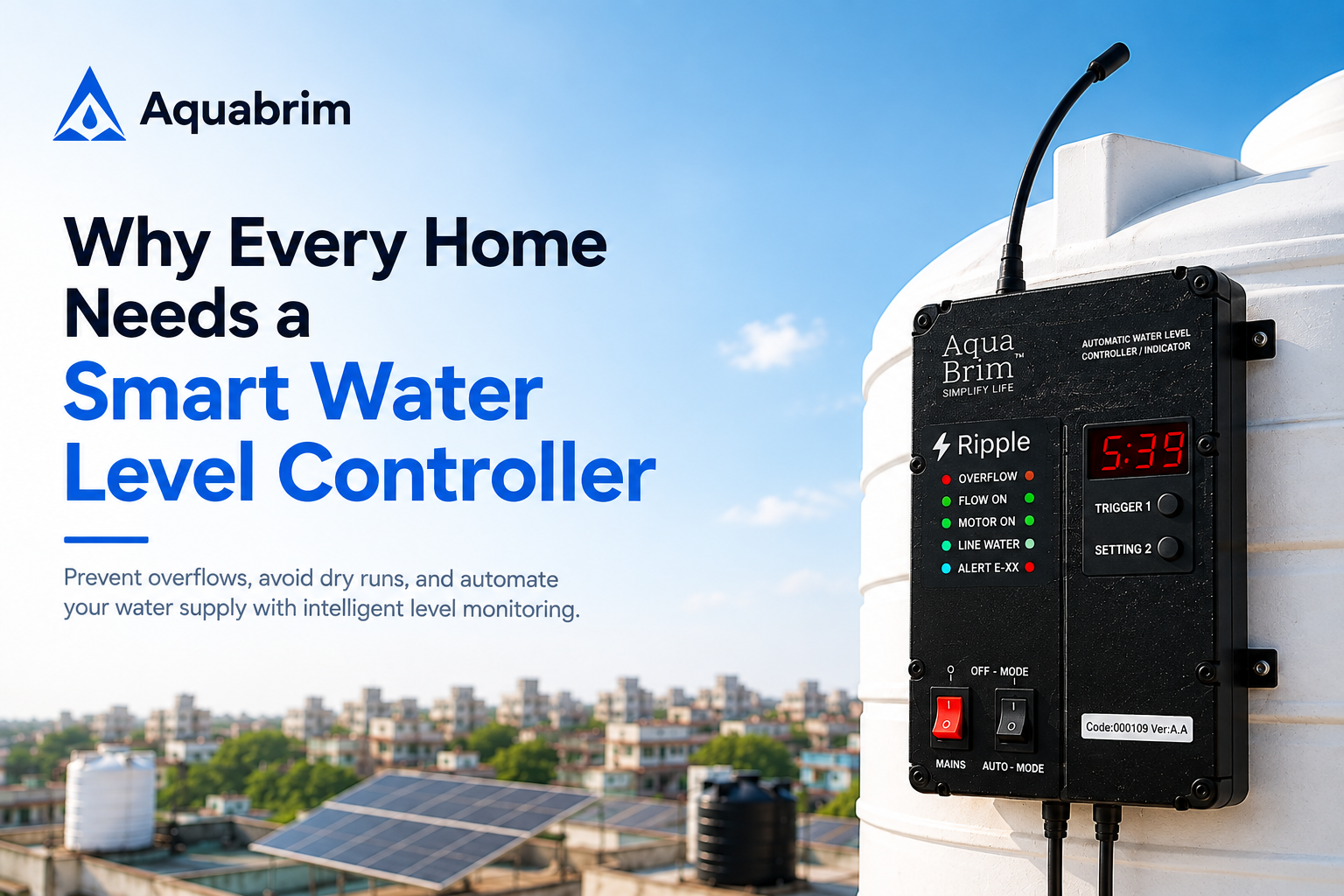
A smart water level controller automatically monitors your tank and switches the motor on or off, so it never overflows and never runs dry. It replaces manual checking and old float switches with a wireless sensor system, preventing water waste, motor damage, and the daily habit of remembering to check the tank.
Most homes still manage water the same way they did twenty years ago: someone checks the tank, someone remembers to switch the motor off, and when that doesn't happen, water overflows onto the terrace or the motor runs dry and burns out. A smart water level controller removes all of that from your daily routine. Here's what it actually is, why it matters, and the different types you'll come across.
What Is a Smart Water Level Controller?
It's a small automated system that checks your tank's water level continuously using a sensor, and controls the motor based on what it finds. When the tank runs low, it switches the motor on. When the tank is full, it switches the motor off. No one has to check, remember, or manually operate a switch. Most modern versions use wireless sensors, so there's no cabling running between the tank and the controller, just a sensor in the tank and a control unit near the motor, talking to each other over radio signal.
How Does It Actually Work?
A sensor sits inside the tank and measures the water level in real time. That reading is sent wirelessly to a controller unit connected to your motor's power supply. Based on the level it receives, the controller decides whether the motor should be running or not, and acts on it immediately, without waiting for a person to notice or respond.
Advantages of a Smart Water Level Controller
- No more overflow: the motor shuts off automatically the moment the tank is full, so water doesn't spill onto your roof or floor
- No more dry-run motor damage: the system protects the pump by stopping it if the water source runs too low, preventing burnout
- Saves water and electricity: automated shutoff means the motor only runs exactly as long as it needs to
- No manual checking: you stop needing to physically check tank levels or remember to switch the motor on or off
- Works even when you're away: the system keeps managing the tank whether you're home or not
- Simple installation: wireless systems avoid rewiring or cutting into walls between the tank and the motor panel
Types of Smart Water Level Controllers
Not every home has the same water setup, so the right type depends on where your water actually comes from:
- Municipal supply homes: need a controller built to catch water the moment it arrives on an unpredictable supply schedule
- Borewell or submersible pump homes: need a controller that protects the motor by monitoring the source itself, not just the tank
- Homes or societies with multiple tanks: need a system that can manage several tanks from one central controller instead of one unit per tank
- Homes that just want alerts: some systems focus purely on monitoring and alarms rather than full motor automation
For a full breakdown of each type and how to pick between them, our team can help you match the right controller to your exact water setup.
Who Actually Needs This the Most?
Anyone who has ever forgotten to switch off a motor, dealt with a dry-run pump failure, or simply wants one less thing to manage at home. It matters even more for households relying on a borewell, since motor damage from dry-running is one of the most common and most avoidable repair costs in Indian homes.
Ready to stop manually managing your tank?
Aquabrim makes smart water level controllers for every home setup, municipal supply, borewell, or multiple tanks. Trusted by 50,000+ homes across India.
FAQ
Frequently Asked Questions
It automatically monitors your tank's water level and switches the motor on or off accordingly, preventing overflow and dry-run motor damage without needing anyone to check or operate it manually.
Yes. A float switch is a basic mechanical device that can get stuck or wear out over time. A smart water level controller uses electronic sensors, is more reliable, and often adds features like dry-run protection, multi-tank support, and alerts.
Most modern systems are wireless, meaning the sensor and controller communicate over radio signal, avoiding the need to run cables between the tank and the motor.
Yes, for borewell and submersible pump setups, this is one of its main jobs, it stops the motor automatically if the water source runs too low, which is the most common cause of motor burnout.
No. The right type depends on your water source, municipal supply, borewell, or multiple tanks each need a system built around that specific setup rather than one generic controller.